













Nitno
A Complete Beginners Guide to Basebuilding in DayZ
A practical walkthrough of gathering materials, building fences and gates, using tools, and avoiding common placement mistakes.
Plan a secure camp, gather the right tools, build shelters and storage, construct fences and gates, add watchtowers, and use a Flag Pole to maintain a larger vanilla base.
Core rule
Walls protect time, not permanent ownership. Layers, airlocks, concealment, and separated storage make a raid slower and less damaging.
36
Nails for a wood fence
60 m
Flag refresh radius
3
Shelter variants
10,000
4-dial combinations
A useful base is easy for its owners to operate, expensive for attackers to breach, and limited enough that the group can maintain it. Start with logistics and security instead of maximum size.
Building priority
Terrain, traffic, nearby loot routes, water access, and sight lines matter more than the size of the finished walls.
Building priority
Build an airlock, leave room for the gate swing, and confirm that the combination lock remains reachable from the safe side.
Building priority
Place the build so its interior dismantle side faces your base. A reversed wall gives attackers access to actions meant for the owner.
Building priority
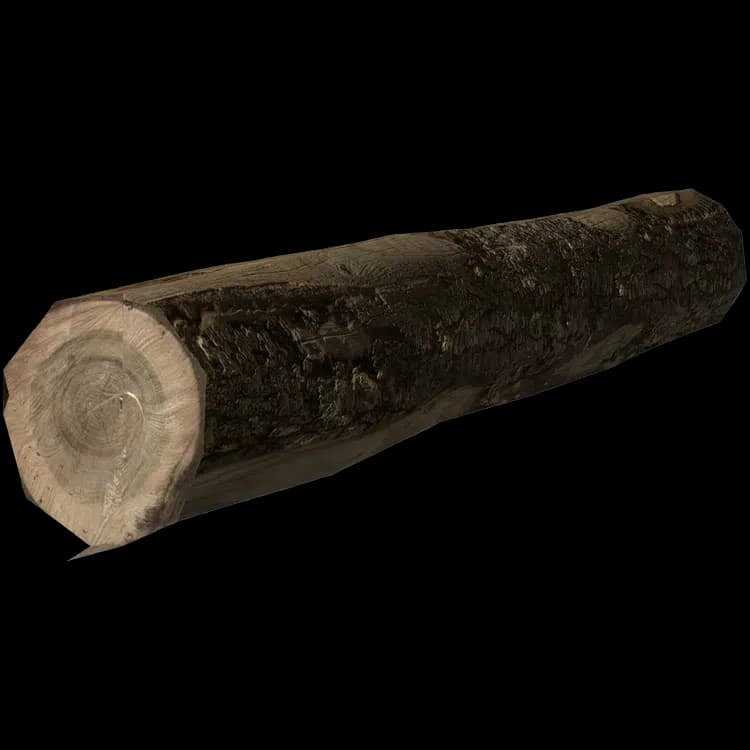
Logs, planks, sheet metal, stones, and tools are heavy. Create a nearby work cache instead of carrying every material at once.
Building priority
Do not keep every weapon, tool, nail, and repair item behind one gate. Use hidden backup storage outside the main base.
Building priority
No vanilla base is permanent or unraidable. Build to delay attackers, limit losses, and make recovery easier after a breach.
Use shelters, crates, barrels, and concealed storage in terrain that naturally breaks sight lines.
Good for: Solo players, backup kits, and low-maintenance storage
Watch for: Little physical protection if the camp is discovered
Block a small number of existing entrances with gates and use the building shell as most of the perimeter.
Good for: Small groups and players with limited nails
Watch for: Predictable buildings are searched often and may have exploitable windows or gaps
Use fences, watchtowers, layered gates, tents, and a flag pole to create a custom base in open terrain.
Good for: Larger groups, vehicles, and long-term projects
Watch for: High material cost and a large visual footprint
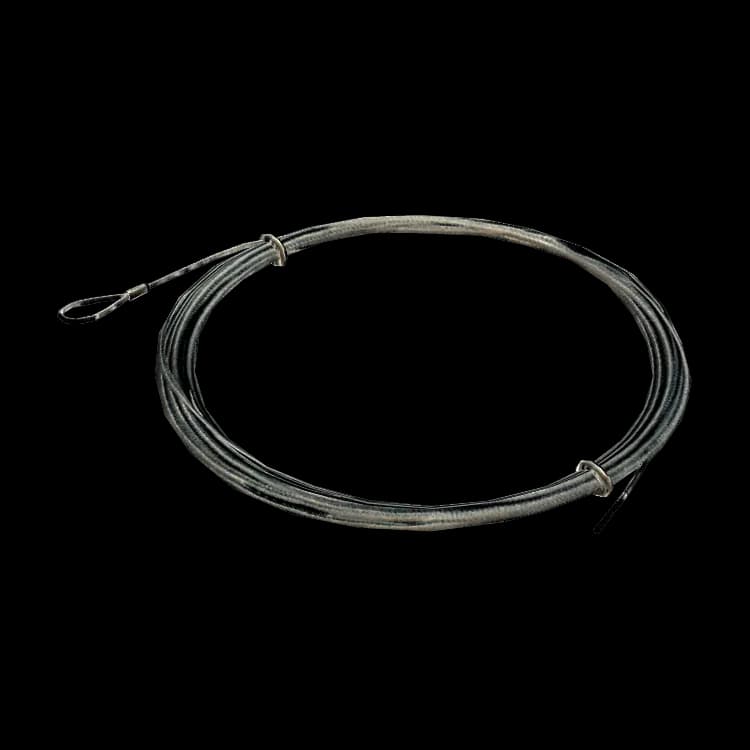
Nails, saws, digging tools, Pliers, and Metal Wire often stop a project before wood does. Build a supply cache and repair specialized tools before moving heavy materials.
Core resources
Logs create foundations and vertical supports. Planks and Nails form frames, walls, floors, stairs, crates, and tower sections. Sheet Metal replaces wood paneling, while Wire and Pliers unlock gates and defenses.
Tool roles
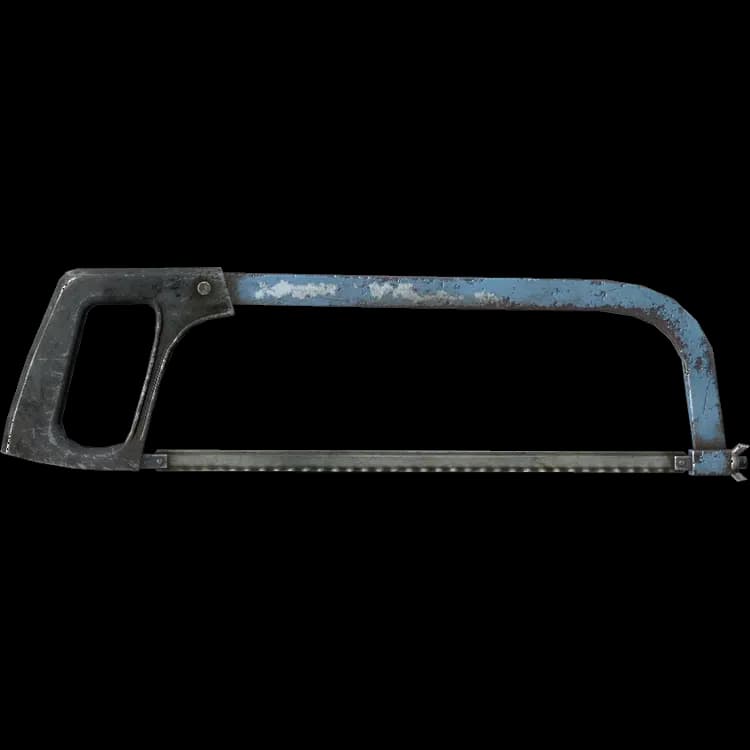
Saws create Planks, digging tools set foundations, hammering tools build components, Pliers create Gates and attach wire, and a Sledgehammer starts the Flag Pole base.
| Job | Recommended tools | Why it matters |
|---|---|---|
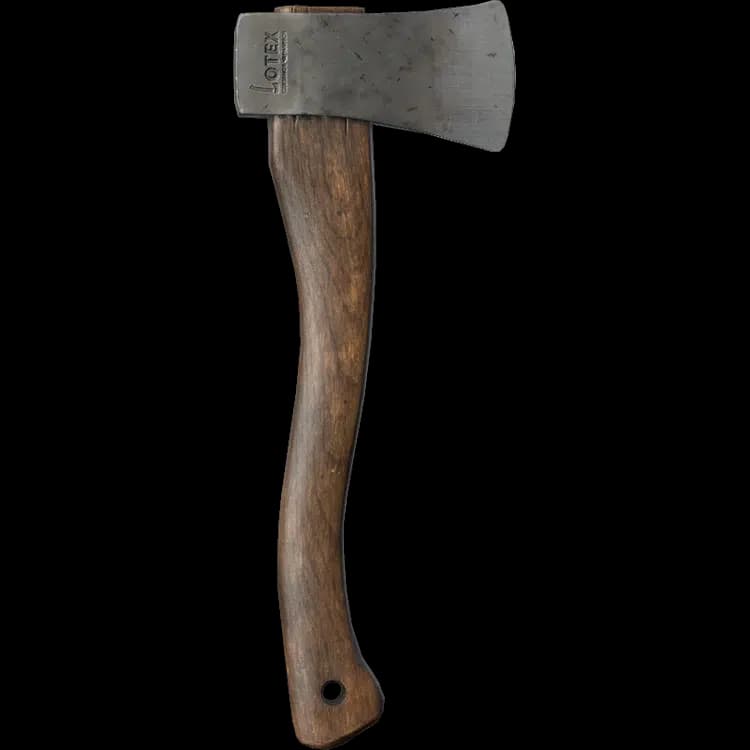
| Cut trees and logs | Splitting Axe, Firefighter Axe, Hatchet | Gather supports near the build, then repair bladed tools with a Sharpening Stone. |
| Make Planks | Hacksaw or Handsaw | Lumber piles are efficient when nearby, while local logs reduce transport distance. |
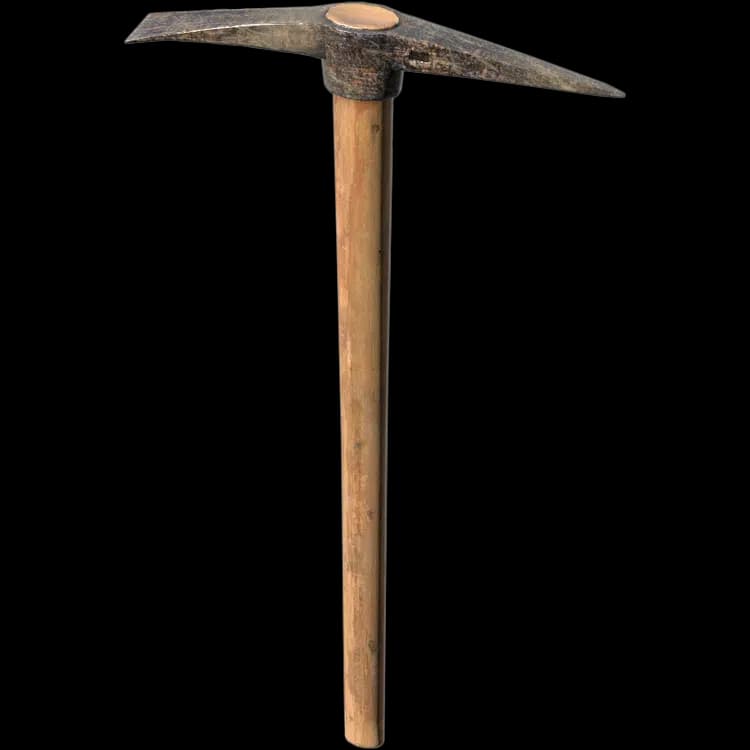
| Set foundations | Pickaxe, Shovel, Field Shovel, or Farming Hoe | Fence and first-level Watchtower posts must be dug into the ground. |
| Build frames and panels | Hammer, Hatchet, or compatible hammering tool | Keep a second hammering option because long projects consume durability. |
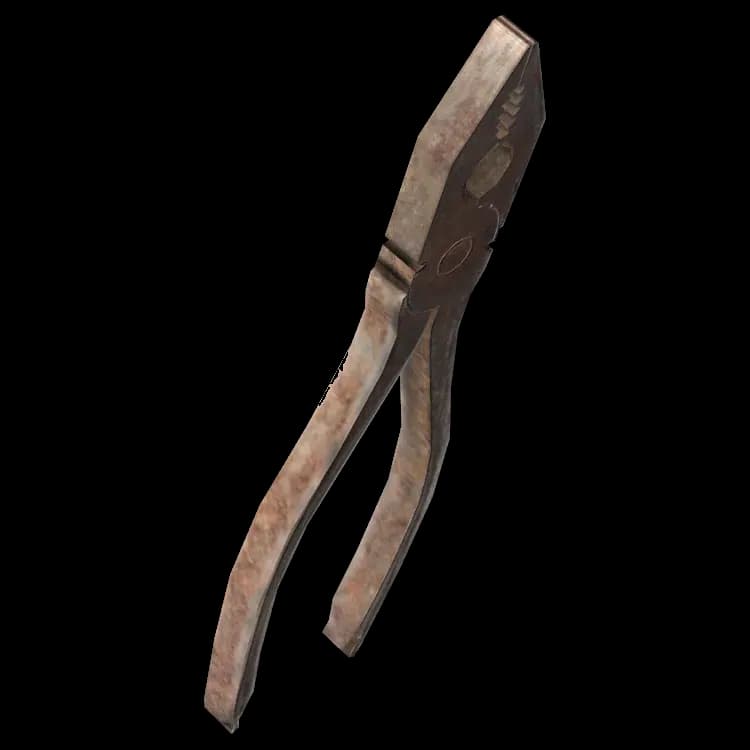
| Create Gates and wire defenses | Pliers | Without Pliers, Metal Wire cannot turn a framed fence into a Gate. |
| Dismantle from inside | Crowbar, Hatchet, or other compatible tools | Recover selected materials while changing layouts or removing old sections. |
These recipes create the layouts and storage used by almost every vanilla camp. Placement kits can be adjusted before committing logs, Nails, and tool durability.
Crafting recipe
The placed kit defines the direction and footprint of the fence before logs are added.
Crafting recipe
Use this for a three-level structure with modular walls, floors, stairs, and a roof.
Crafting recipe
The kit starts the expensive Flag Pole project. The Rope can be recovered after the base stage is built.
Crafting recipe
One deployed Shelter Kit can become an Improvised, Leather, or Tarp Shelter.
Crafting recipe
A compact craftable container for camps, buildings, vehicles, and hidden backup storage.
Uneven ground, nearby objects, ceilings, doorways, and terrain collision can block later stages. Confirm the orientation, gate swing, lock side, and available work space before building the foundation.
A full perimeter is not the only way to store supplies. Small camps are cheaper, easier to relocate, and less obvious when placed away from roads and high-value routes.
Shelter comparison
Every shelter starts with a Shelter Kit. The final material determines how difficult the shelter is to gather, how visible it is, and what type of camp it suits.
| Shelter | Materials after kit | Best use | Main tradeoff |
|---|---|---|---|
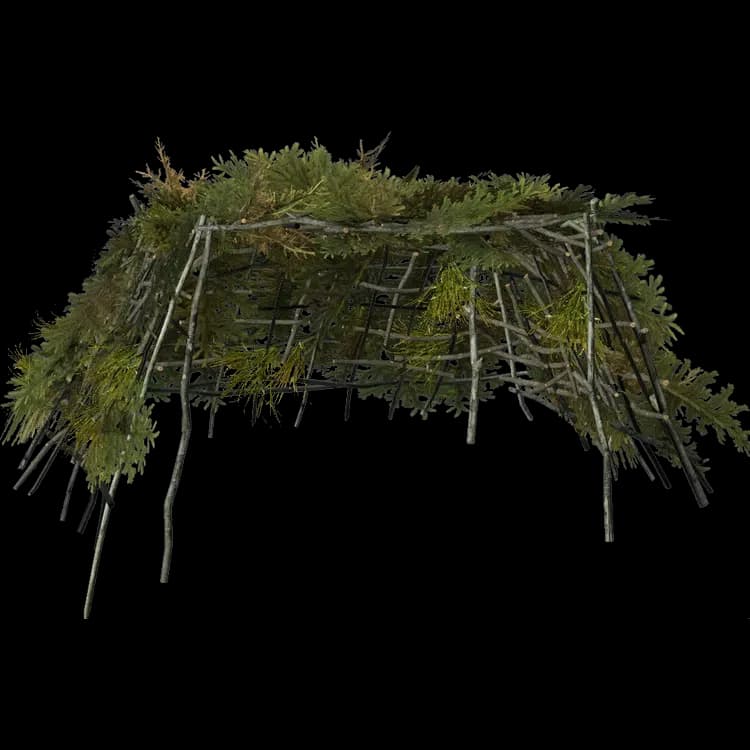 Improvised Shelter Improvised Shelter | 4 Long Sticks and 50 Short Sticks | Concealed forest camps | Requires extensive stick gathering |
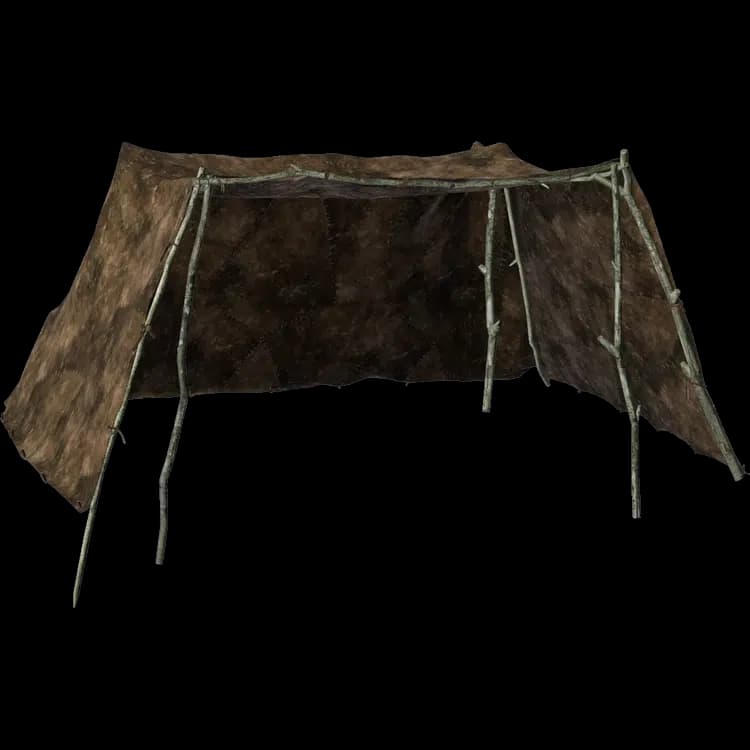 Leather Shelter Leather Shelter | 4 Long Sticks and 8 Tanned Leather | Hunting camps and natural-looking storage | Requires hides and Garden Lime |
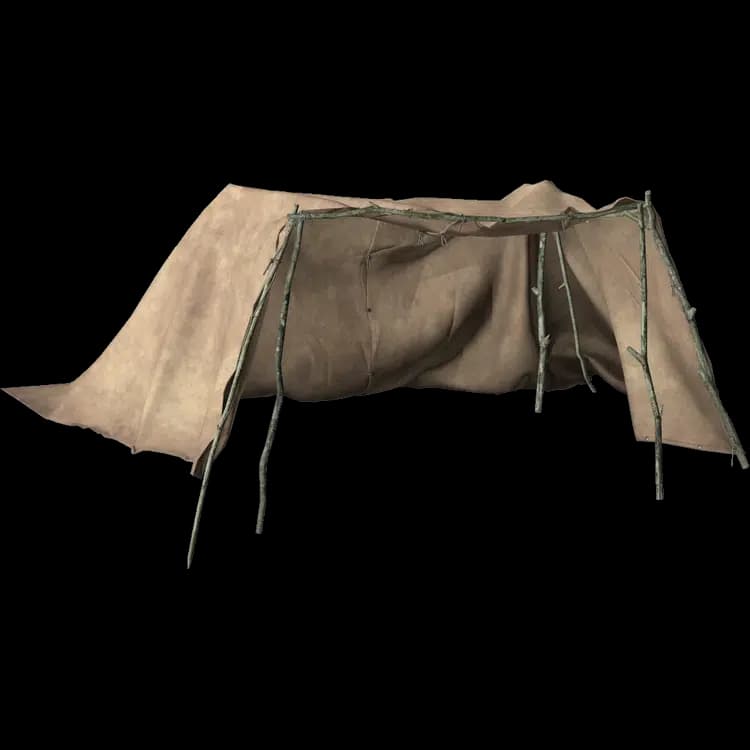 Tarp Shelter Tarp Shelter | 4 Long Sticks and 4 Tarp | Fast setup using industrial supplies | Tarp is usually easier to spot |
Shelters provide storage and concealment, but they do not provide the protection of fences, gates, or secured buildings.
Storage roles
Crates fit into tight rooms and hidden caches. Barrels and Sea Chests provide found storage without spending Nails. Tents offer much more space, but require flat placement and create a larger visible target.
Recommended setup
Spread valuable supplies across several containers. Losing one crate should not remove every weapon, tool, medicine item, and building resource you own.
A Fence is built in stages. The full wooden version uses 2 Logs, 18 Planks, and 36 Nails. Metal panels replace the wooden panel materials but still require wooden frames.
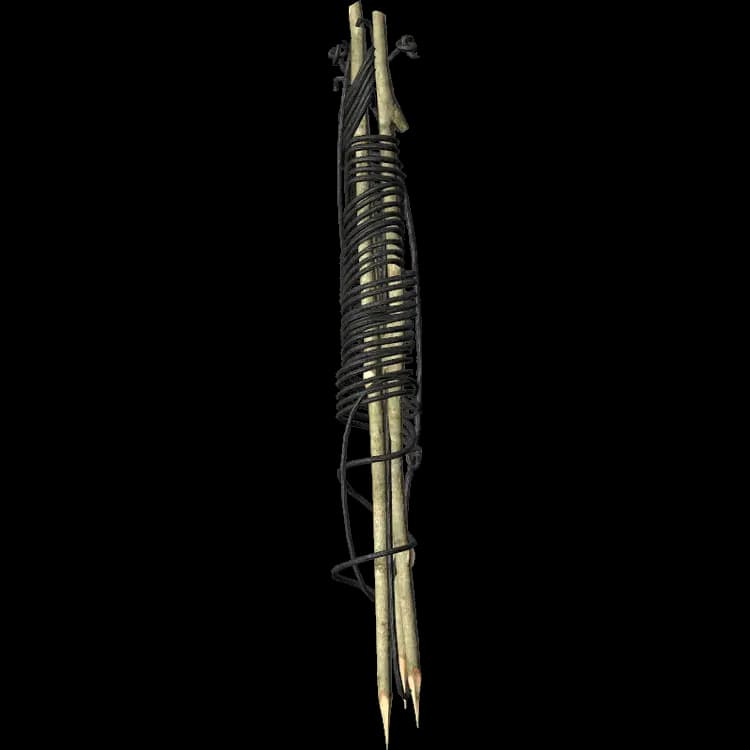
Craft 2 Short Sticks with Rope, rotate the Fence Kit, and keep the interior side facing the protected area.
Attach 2 Wooden Logs and use a Pickaxe, Shovel, Field Shovel, or Farming Hoe to build the Fence Base.
Each upper or lower frame uses 4 Planks and 8 Nails. Both frames total 8 Planks and 16 Nails.
Each wood panel uses 5 Planks and 10 Nails. A metal panel uses 3 Sheet Metal and 12 Nails.
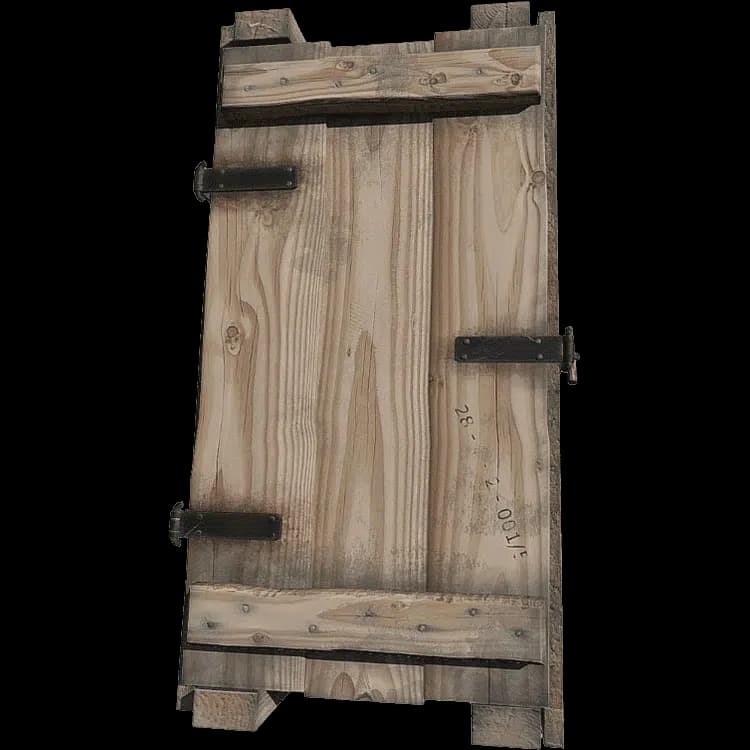
Attach Metal Wire to the framed fence and use Pliers. Add a Combination Lock after confirming the opening direction.
| Fence build | Logs | Planks | Nails | Sheet Metal | Role |
|---|---|---|---|---|---|
| Full wooden fence | 2 | 18 | 36 | 0 | Standard enclosure and Gate base |
| Full metal-panel fence | 2 | 8 | 40 | 6 | More durable wall paneling |
| Platform addition | 0 | 5 | 15 | 0 | Elevated firing and observation position |
| One stair set | 0 | 4 | 8 | 0 | Access to a built platform |
Gate security
The 3-dial lock has 1,000 possible codes. The 4-dial version has 10,000. Set the code before attachment, avoid obvious patterns, and test the lock from both sides before moving valuable storage behind it.
Optional sections
A Fence with a platform cannot be converted into a Gate, and a Gate cannot use the fence platform. Decide whether the section controls access or provides elevation before spending Planks and Nails.
Camo Nets conceal the outline, while upper Barbed Wire helps discourage climbing. These attachments support security but do not replace additional walls and airlocks.
A Watchtower can reach three levels. Build each stage in order and leave enough room to reach every construction prompt before surrounding it with other walls.
Construction order
Complete each floor before adding the next level. Confirm that stairs, walls, and interaction prompts remain reachable before enclosing the tower with nearby structures.
Core components
Watchtowers consume large amounts of Logs, Planks, Nails, and tool durability. Staging materials nearby prevents repeated supply runs.
Material reference
These values apply to individual Watchtower components. Wall costs are listed per side, so multiply them by the number of sides you plan to complete.
| Component | Materials | Required tool |
|---|---|---|
| First-level base | 4 Wooden Logs | Digging tool |
| Higher-level base | 4 Wooden Logs | Hammer or Hatchet |
| Level floor | 10 Wooden Planks and 20 Nails | Hammer or Hatchet |
| Stairs | 6 Wooden Planks and 18 Nails | Hammer or Hatchet |
| One wall base | 4 Wooden Planks and 8 Nails | Hammer or Hatchet |
| One wooden wall panel | 5 Wooden Planks and 5 Nails | Hammer or Hatchet |
| One metal wall panel | 3 Sheet Metal and 5 Nails | Hammer or Hatchet |
| Final top roof | 6 Wooden Planks, 20 Nails, and 6 Sheet Metal | Hammer or Hatchet |
Build only the walls and stairs your layout needs. A fully enclosed three-level Watchtower requires far more materials than the basic structural frame.
Location tradeoff
Watchtowers provide elevation, taller walls, and better observation angles. They also make a compound easier to notice from roads, hills, rooftops, and treelines. Use one where vertical defense is worth the larger profile.
The Flag Pole is a large logistics project. Its raised flag refreshes supported object lifetimes within 60 meters every five days, but the flag slowly lowers and must be raised again.
Flag Pole stage
Flag Pole Kit, 1 Wooden Log
Tool: Sledgehammer
Creates the initial vertical base and returns the placement kit.
Flag Pole stage
32 Large Stones, 6 Wooden Logs
Tool: Pickaxe or Shovel
Builds the heavy stone and log support around the base.
Flag Pole stage
3 Wooden Logs, 60 Nails, Metal Wire, Rope
Tool: Hammer or Hatchet
Completes the mast and hoist so a Flag can be attached and raised.
What the flag does
A raised Flag Pole refreshes supported objects in a 60 meter radius every five days. The flag lowers over roughly 45 days. Raise it periodically to keep the area active. Fences, Watchtowers, and Tents normally use long lifetimes, and the Flag Pole can extend the time before an unattended base disappears.
Before building one
Raid resistance is a combination of layers, concealment, compartmentalization, and backup storage. The goal is to protect the most important supplies after the outer wall fails.
Layered defense
Build at least one lockable barrier between the entrance and main storage. Use different codes for outer and inner gates, leave working room between them, and avoid placing layers so close that one explosive blast threatens both.
Loss control
Store daily-use items near the entrance, keep high-value equipment deeper inside, and maintain at least one hidden external cache with a saw, digging tool, Nails, food, medical supplies, and a basic weapon.
Keep dismantle access and attachments on the protected interior side.
Use terrain, Camo Nets, dark interiors, and irregular placement instead of an exposed square.
Avoid slopes and gaps that expose the structural frame around a finished panel.
Generators, axes, saws, vehicles, and nighttime lighting can reveal an active base.
Base utilities improve comfort and defensive options, but every attachment has a cost in visibility, maintenance, inventory space, or required tools.
Concealment
Camo Nets attach to Fences, Watchtowers, and tent variants. They reduce visual contrast but do not make a base invisible or add meaningful raid durability.
Contact defense
Use Pliers to attach Barbed Wire to Fence or Gate sections. Upper placement helps discourage climbing, while lower placement threatens players working close to the wall.
Electricity
A Power Generator requires fuel and a Spark Plug. Connect a Construction Light directly or extend the setup with a Cable Reel. Keep powered equipment under cover and switch lights off when they are no longer needed.
Visibility warning
Generator noise and bright lights can reveal an active base from a long distance, especially at night.
This sequence creates useful storage early, avoids exposing every material at once, and reaches a functional airlock before expanding into expensive tower or flag projects.
Craft one or more Wooden Crates or build a Shelter away from the final entrance.
Place the first Fence, build both frames and panels, convert it to a Gate, and attach a 4-dial lock.
Build a second Gate with enough space to close one before opening the other.
Separate daily supplies from high-value gear and keep explosives away from outer walls.
Add fences, metal panels, upper Barbed Wire, or a Watchtower only where the layout needs them.
Build a Flag Pole after the compound is large enough to justify its cost and visibility.
Before the first Gate
Most failed projects are caused by placement, logistics, visibility, or storage decisions rather than a missing recipe.
A gate can collide with walls, vehicles, terrain, or furniture. Confirm the full opening arc before committing valuable materials.
The interior side exposes attachment and dismantle interactions. Keep that side facing the protected area.
A 3-dial lock has only 1,000 combinations. A 4-dial lock increases that to 10,000 and is the better long-term choice.
Raid damage and item access can threaten containers near exposed panels. Keep the best storage deeper inside the base.
Freshly cleared vegetation, repeated axe noise, and visible lumber movement can advertise a hidden location.
One mistake, death, or rush through the doorway can expose the entire base. Separate the exterior from the main storage area.
Secure a small crate or shelter cache first. Losing every nail and tool while the project is unfinished wastes the entire run.
The flag refreshes item lifetimes. It does not strengthen walls, lock gates, or stop attackers from finding the base.
The visual placement prompts, component interaction points, and Gate direction are easier to understand after seeing a complete build performed.
Quick answers for the recipes, materials, Gate conversion, lock choice, Flag Pole, storage, and raid expectations covered above.
Choose a location, craft a Fence Kit or Watchtower Kit from sticks and Rope, place the kit, add Wooden Logs, and use a digging tool to create the foundation. Frames and panels then require Planks, Nails, and a hammering tool.
A complete two-panel wooden fence uses 2 Wooden Logs, 18 Wooden Planks, and 36 Nails, plus a Fence Kit and the required digging and hammering tools.
Build the fence frame, attach Metal Wire, and use Pliers to create the gate. A fence with a platform cannot also become a gate, so decide the role before adding optional sections.
Yes. A 3-dial lock has 1,000 possible codes, while a 4-dial lock has 10,000. Use the 4-dial version for important gates whenever possible.
A raised flag refreshes supported object lifetimes within a 60 meter radius every five days. The flag gradually lowers and must be raised again to keep the system active.
The Wooden Crate is the main craftable option and requires 8 Wooden Planks and 16 Nails. Shelters also provide concealed camp storage but require more gathering and placement space.
No vanilla base should be treated as unraidable. Layers, metal panels, airlocks, concealment, and separated storage can increase the time and resources required to raid it.
Not always. Players who interact with their containers and structures regularly may not need the expense or visibility of a flag pole. It is more useful for larger bases and long periods between visits.
Vanilla recipes and persistence values can change. These references cover the main systems used by this guide. Community servers may override every value.
Overview of vanilla fortifications, storage, shelters, tools, and base-building equipment.
Fence stages, wooden and metal panels, platforms, stairs, gates, attachments, and tools.
Watchtower construction, levels, wall sections, floors, stairs, roof, and dismantling tools.
Flag Pole materials, construction stages, refresh radius, and long-term persistence behavior.
Shelter Kit recipe and the Improvised, Leather, and Tarp Shelter build paths.
Base projects depend on crafting knowledge, healthy supply runs, maintained tools, vehicles for hauling, and secure equipment choices.
Rope, crates, shelters, fireplaces, filters, and survival recipes.
Maintain saws, axes, tools, generators, lights, and protective gear.
Move Planks, Logs, barrels, tents, tools, and group supplies efficiently.
Prepare for long building runs, injuries, weather, and contaminated supplies.